Spending a night in a Sahara desert camp is one of the most memorable experiences you can have in Morocco. Far from busy cities, traffic, and everyday noise, you sleep among the dunes, surrounded by silence and an enormous sky filled with stars.
For many travelers, the desert camp is the highlight of their Morocco trip. In the Merzouga area, the golden dunes of Erg Chebbi create the perfect setting for a night in the Sahara, with camel rides, sunset views, traditional dinner, music around the fire, and sunrise over the dunes. Merzouga is one of the main gateways to the Sahara and is known for its dunes, desert tracks, palm groves, and bivouac experiences.
But what is it actually like to sleep there? Here is what you can expect.
Arriving at the Sahara Desert Camp
Your desert experience usually begins in the afternoon when you arrive in the Merzouga area. Depending on your tour, you may leave your vehicle and continue toward the camp by camel or by 4x4.
If you choose a camel ride, the journey through the dunes becomes part of the experience. As the sun begins to lower, the sand changes color and the landscape becomes quieter.
After reaching the camp, you can check into your tent, relax for a while, and enjoy the surroundings before dinner. The Merzouga region — a landscape of dunes, sunshine, silence and desert trails — is particularly suited to this type of overnight experience.
What Are the Tents Like?
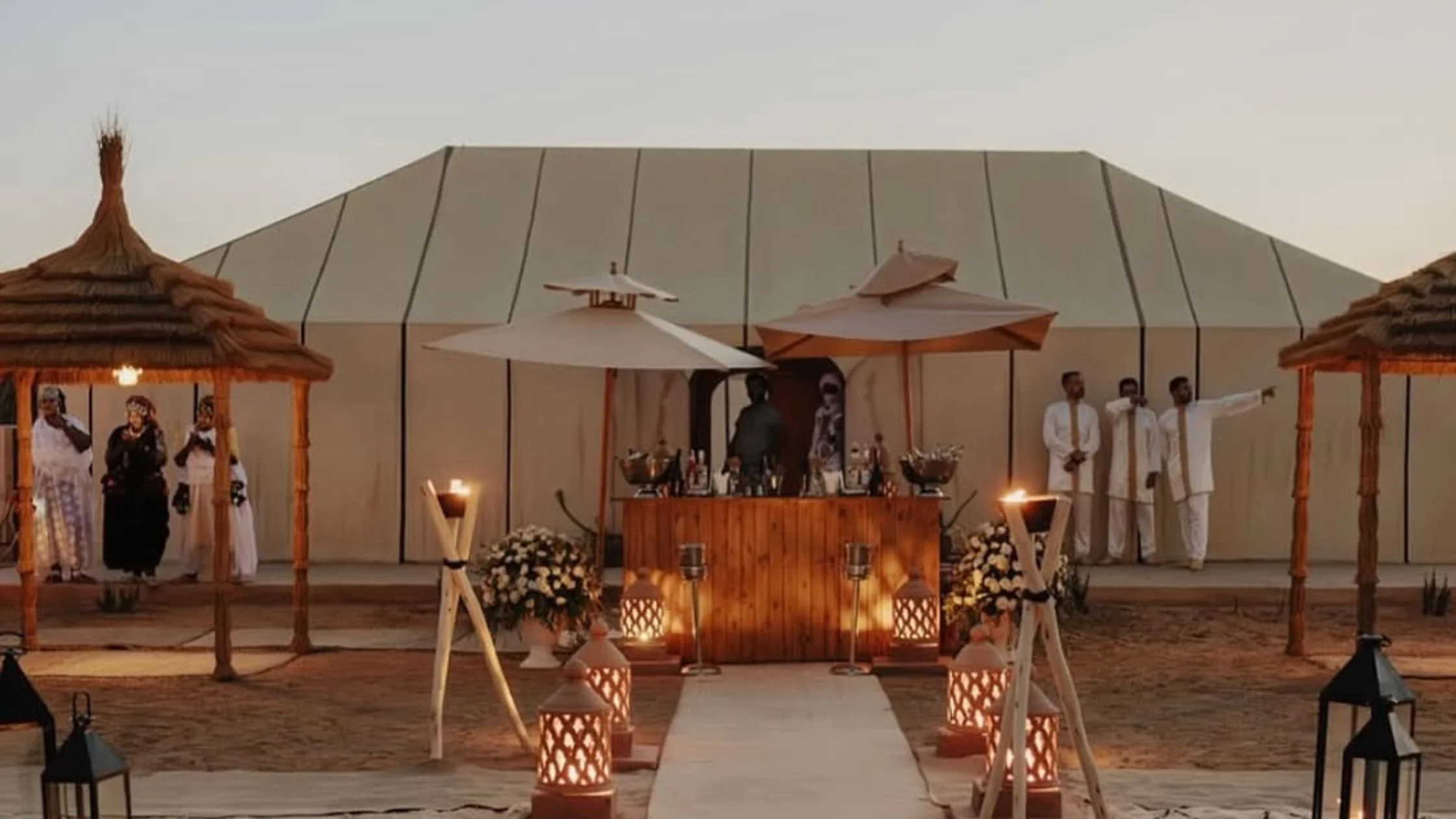
Not all Sahara camps are the same. Accommodation can range from simple traditional bivouac tents to comfortable luxury tents with private bathrooms and more hotel-style facilities.
A traditional camp may have simple furnishings, carpets, mattresses, and shared facilities. Luxury camps generally offer larger private tents, comfortable beds, electricity, lighting, and private bathrooms.
For travelers who want a more comfortable desert experience, a luxury Sahara camp allows you to enjoy the atmosphere of the desert without giving up many of the comforts of a hotel. Morocco offers bivouacs at different levels of comfort and price, including camps designed for travelers looking for a more luxurious stay in the desert.
Watching the Sunset Over the Dunes
One of the best moments of the evening is sunset. Climb a nearby dune, sit on the sand, and watch the sun slowly disappear behind the horizon. The color of the dunes changes as the light becomes softer, creating a completely different atmosphere from the daytime desert.
You do not need a complicated activity to enjoy this moment. Simply sitting quietly and watching the landscape is often enough.
For photographers, sunset is also one of the best times to capture the shapes and shadows of the Erg Chebbi dunes.
Dinner in the Desert
After sunset, guests normally return to the camp for dinner. A traditional Moroccan desert dinner may include dishes such as Moroccan salads, soup, tagine, couscous, bread, fruit, and tea. The exact menu depends on the camp.
Dinner is usually followed by time around the campfire, where guests can relax, listen to traditional music, talk with other travelers, and enjoy the peaceful surroundings.
The atmosphere is very different from a normal hotel restaurant. There are no city streets outside and very little artificial light. Instead, you are surrounded by desert and open sky, and dinner around a fire with music is part of the classic bivouac experience.
What Is the Night Like in the Sahara?
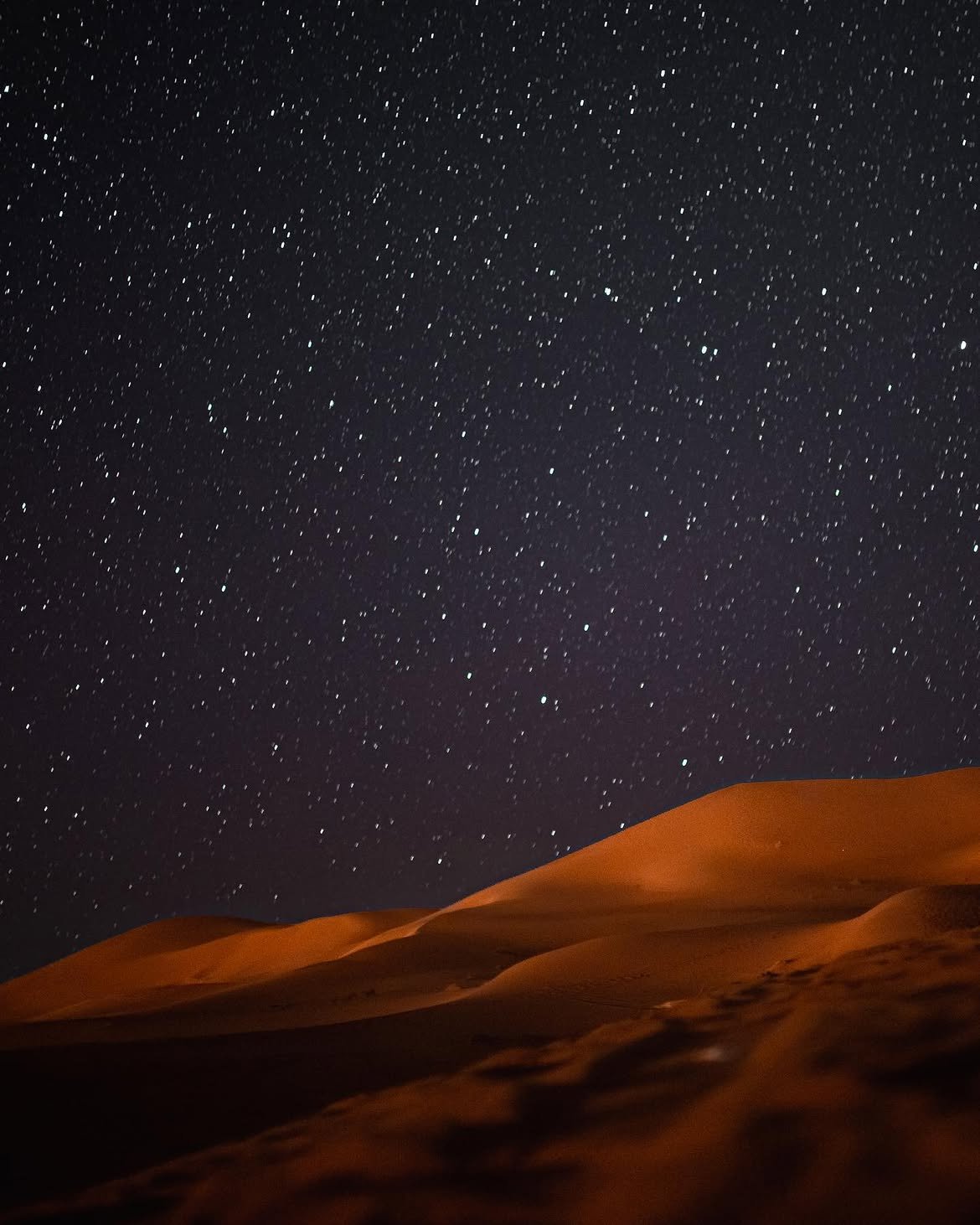
Once the evening becomes quiet, the desert feels completely different. The absence of city lights makes the night sky one of the most impressive parts of the experience. On a clear night, you can spend time outside looking at the stars before returning to your tent.
The silence is also something many travelers remember. Instead of traffic, phones, and city noise, you hear the wind moving across the dunes and the occasional sounds from the camp.
This is one reason a desert bivouac feels less like a normal hotel stay and more like a complete change of environment.
Is It Cold at Night?
Yes, desert temperatures can change considerably between day and night. Even after a warm afternoon, evenings and early mornings can feel cold, particularly during autumn and winter. Most good camps provide blankets and appropriate bedding, but it is still a good idea to bring warm layers.
A sweater, light jacket, and comfortable closed shoes can be useful, especially if you plan to sit outside after dinner or watch the sunrise.
During summer, temperatures can remain high for longer, so lightweight clothing and good hydration are important.
Waking Up for Sunrise
If sunset is beautiful, sunrise is equally special. Many travelers wake up early and walk to a nearby dune before sunrise. The desert is often quiet at this time, and the first light gradually appears over the horizon.
As the sun rises, the dunes change from dark silhouettes to shades of gold and orange. Spending the night in a desert bivouac and waking to the sunrise over the dunes is one of the signature Sahara experiences.
After sunrise, guests return to the camp for breakfast before continuing their Morocco journey.
Camel Trek or 4x4 to the Camp?
Both options offer a different experience.
Camel Trek
The traditional camel ride is a popular way to enter the dunes. It gives you time to slow down and appreciate the desert landscape from a different perspective. It is particularly enjoyable around sunset, when the changing light creates beautiful views across the dunes.
4x4 Transfer
A 4x4 transfer is a practical alternative, especially for travelers who prefer not to ride a camel or who have mobility concerns. It is also useful for reaching more remote areas of the desert and for exploring the surrounding dunes during a private desert excursion.
Some travelers choose both: a camel ride at sunset and a 4x4 excursion the following day.
What Can You Do During a Desert Camp Stay?
A night in the Sahara does not have to be limited to sleeping in a tent. Depending on your itinerary and camp, you can enjoy:
- Camel trekking
- Watching the sunset
- Sandboarding
- Traditional Moroccan dinner
- Campfire music
- Stargazing
- Sunrise photography
- 4x4 desert excursions
- Visits to local villages
- Meeting Amazigh or nomadic families
- Visiting Khamlia and experiencing Gnawa music
- Exploring the area around Merzouga
The wider Merzouga region also offers desert tracks, hiking, wildlife areas, and Dayet Srij, a seasonal lake known for its birdlife.
Is a Luxury Sahara Camp Worth It?
The answer depends on the type of trip you want. A simple camp can provide a more traditional experience and is suitable for travelers who mainly want to enjoy the desert atmosphere.
A luxury camp is designed for travelers who want more comfort. Depending on the camp, this can include a private ensuite bathroom, comfortable beds, electricity, larger tents, and additional services.
For couples, honeymooners, families, or travelers celebrating a special occasion, a luxury camp can make the overnight experience more comfortable while keeping the feeling of sleeping in the desert.
What Should You Pack for a Desert Camp?
You do not need to bring a lot of equipment. Useful items include:
- Warm layer for the evening
- Comfortable shoes
- Sunglasses
- Sunscreen
- Hat or scarf
- Small overnight bag
- Camera or phone
- Power bank
- Personal toiletries
- Reusable water bottle
If you are traveling during winter, bring warmer clothing because desert nights and early mornings can be surprisingly cold.
Is Sleeping in a Sahara Camp Safe?
Staying at an established desert camp is a common tourism experience in Morocco. Camps receive travelers regularly and are set up to provide accommodation, meals, and basic services.
As with any remote destination, it is sensible to follow your guide's instructions, keep your belongings secure, and stay within the designated camp area at night.
If you are traveling on a private Morocco tour, your driver or local team can also help you with the transfer to and from the camp and explain what to expect.
How Long Should You Stay in the Sahara?
For most travelers, one night is enough to experience the essential desert highlights: the journey into the dunes, sunset, dinner, the night sky, and sunrise.
However, spending two nights in Merzouga gives you more time to explore the region without rushing. You can visit Khamlia, meet a nomadic family, explore the desert by 4x4, visit Dayet Srij when conditions are suitable, or simply enjoy another quiet evening among the dunes.
For travelers who want a slower Morocco itinerary, two nights in Merzouga can be a particularly enjoyable option.
The Morning After the Desert Camp
After breakfast, it is time to leave the dunes and continue your Morocco journey. Depending on your itinerary, you might visit Rissani, Erfoud, the Ziz Valley, Todra Gorge, Dades Valley, Ouarzazate, or continue toward Fes or Marrakech.
Leaving the desert can feel surprisingly difficult after such a peaceful night, but the experience becomes one of the memories you carry with you for the rest of your trip.
Why Is a Sahara Desert Camp Experience So Special?
Sleeping in the Sahara is not simply about staying in a tent. It is about slowing down — watching the sunset without a busy schedule, eating dinner under an open sky, listening to music around a fire, looking at the stars, and waking up early to see the first sunlight reach the dunes.
The Moroccan desert offers a genuine change of pace, and the bivouac experience is one of the simplest ways to experience it. Whether you choose a traditional bivouac or a luxury desert camp, a night among the dunes of Merzouga can become one of the most memorable parts of your Morocco adventure. From the first camel ride across the dunes to the last view of the sunrise, it offers something very different from Morocco's cities, medinas, and mountain landscapes — a night in the Sahara is not just a place to sleep, it is an experience to remember.
Frequently Asked Questions
Can I sleep in a desert camp in Morocco?
Yes. Desert bivouacs are available in several Moroccan desert areas, including the Merzouga region and Erg Chebbi.
Do Sahara desert camps have private bathrooms?
Some camps have shared bathrooms, while many luxury camps offer private ensuite bathrooms. It is important to check the facilities before booking.
Can children stay in a Sahara desert camp?
Yes. Families can stay in desert camps, although parents should consider the season, temperature, camel ride, and the distance involved when choosing their camp.
Can I visit the Sahara without riding a camel?
Yes. A 4x4 transfer or desert excursion can be arranged instead of a camel ride.
What is the best time for a Sahara desert camp?
Spring and autumn generally offer comfortable conditions for exploring the desert. Winter can have cold nights, while summer can be very hot during the day.
Should I spend one or two nights in Merzouga?
One night is enough for the classic desert camp experience. Two nights allow more time for exploring the Merzouga area and enjoying a slower pace.